
How does a remora stay attached to a shark?
Visual description
A remora swims beneath a shark. The camera moves in on the oval disc on top of the smaller fish’s head. Rows of plates inside the disc tilt as the fish rises into contact. The camera pulls back to show the remora riding under the swimming shark.
About this video
A remora seals a disc on top of its head against the shark. Lower pressure inside the disc helps hold the fish against its host, while friction helps keep it from sliding backward.
Watch the rows of plates tilt as the remora approaches the shark. On a real fish, these plates carry tiny toothlike projections called spinules. Beckert and colleagues measured their shape and tested how they grip textured surfaces. Their results help explain why spinules are especially effective against rough skin like a shark’s.
Teach suction and friction with a remora
Pause at 0:11, when the shark is just overhead. Find the rows of movable plates on the disc on top of the remora’s head.
View the full frame at 0:11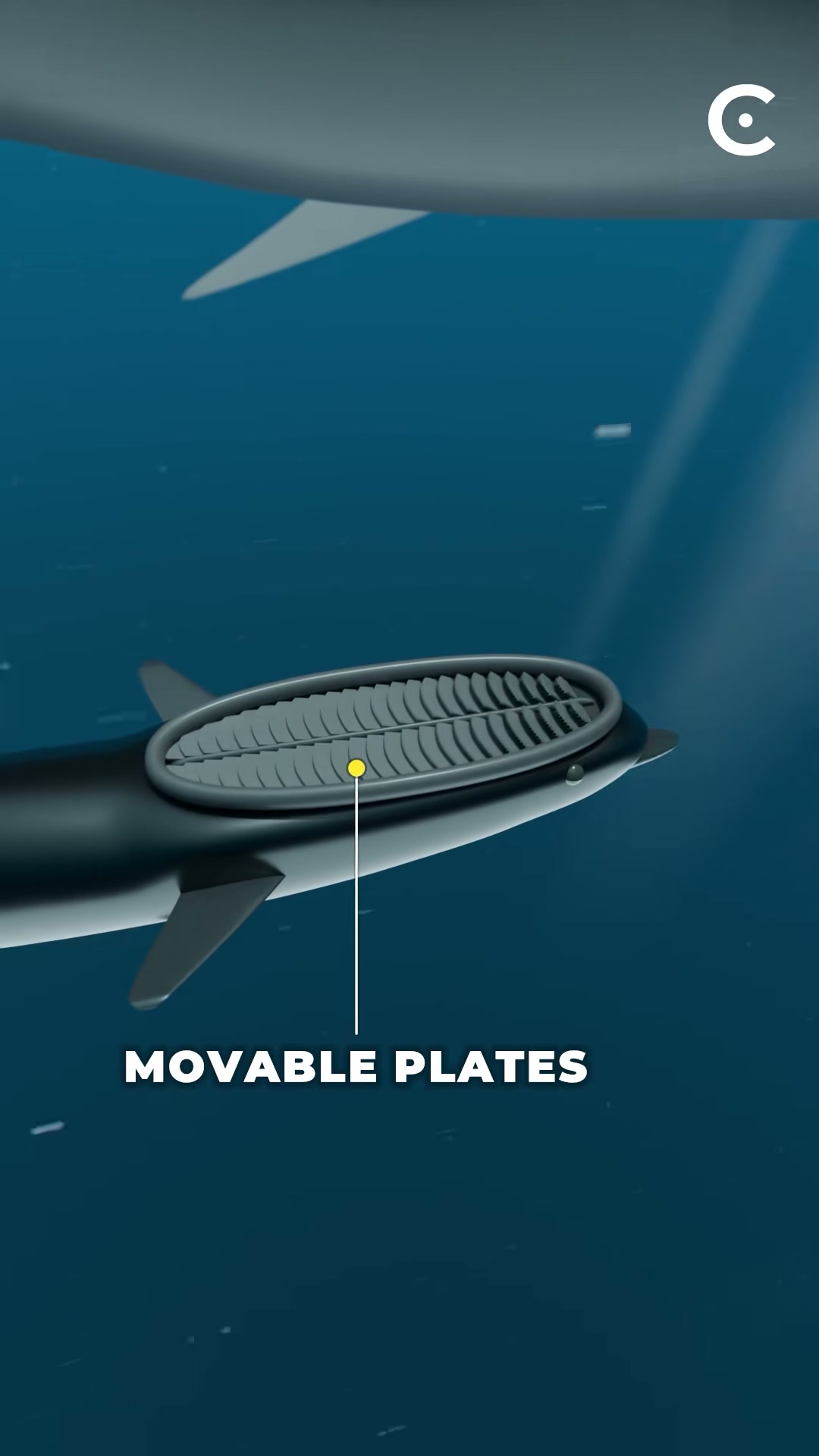
Ask the class
Imagine pulling the remora straight away from the shark, then trying to slide it backward along the shark’s skin. What helps it resist each movement?
Teacher’s answer key
The soft rim seals the disc against the shark. Water pressure outside the disc is higher than the pressure inside, so it presses the fish against its host. When the fish starts to slide backward, tiny projections called spinules on the tilted plates catch against the shark’s rough skin. The resulting friction resists the slide.
Film and frame by Cosmoknowledge Animated. Request reuse permission.